Creatine for Women: The Perimenopause Supplement That Isn’t Just for Gym Bros
What Actually Helps
Creatine has an image problem: giant tubs, gym bros, locker-room protein powder. Strip away the branding and it’s one of the most-studied, most-promising supplements for women in mid-life.
What creatine actually is
Creatine isn’t a steroid or a stimulant — it’s a compound your body already makes and stores, mostly in muscle, where it helps regenerate the cellular energy currency (ATP) your cells run on. You get some from food (meat and fish) and make the rest yourself. Supplementing simply tops up those stores. Your brain uses it too, which is where the newer research gets interesting.
Muscle and strength: the longevity angle
Perimenopause accelerates the loss of muscle and bone, which is exactly why body composition shifts in this decade. Paired with resistance training, creatine is well studied for supporting strength and lean muscle — and muscle is one of the strongest levers you have for staying strong, mobile, and metabolically healthy for decades to come. This isn’t about performance; it’s about longevity. (One note: the evidence here is for muscle, not bone. Studies haven’t shown creatine improves bone density.)
The supplement long marketed only to men may be the one built for exactly this decade.
The brain angle (emerging)
Because the brain is an energy-hungry organ that also uses creatine, researchers are studying whether supplementing supports cognition and mood — particularly under stress or sleep deprivation, two things perimenopause serves in abundance. This research is early and far from settled, so it’s a reason for interest, not a promise. But it’s a genuinely intriguing frontier for a stage defined partly by brain fog and broken sleep.
How it’s typically studied
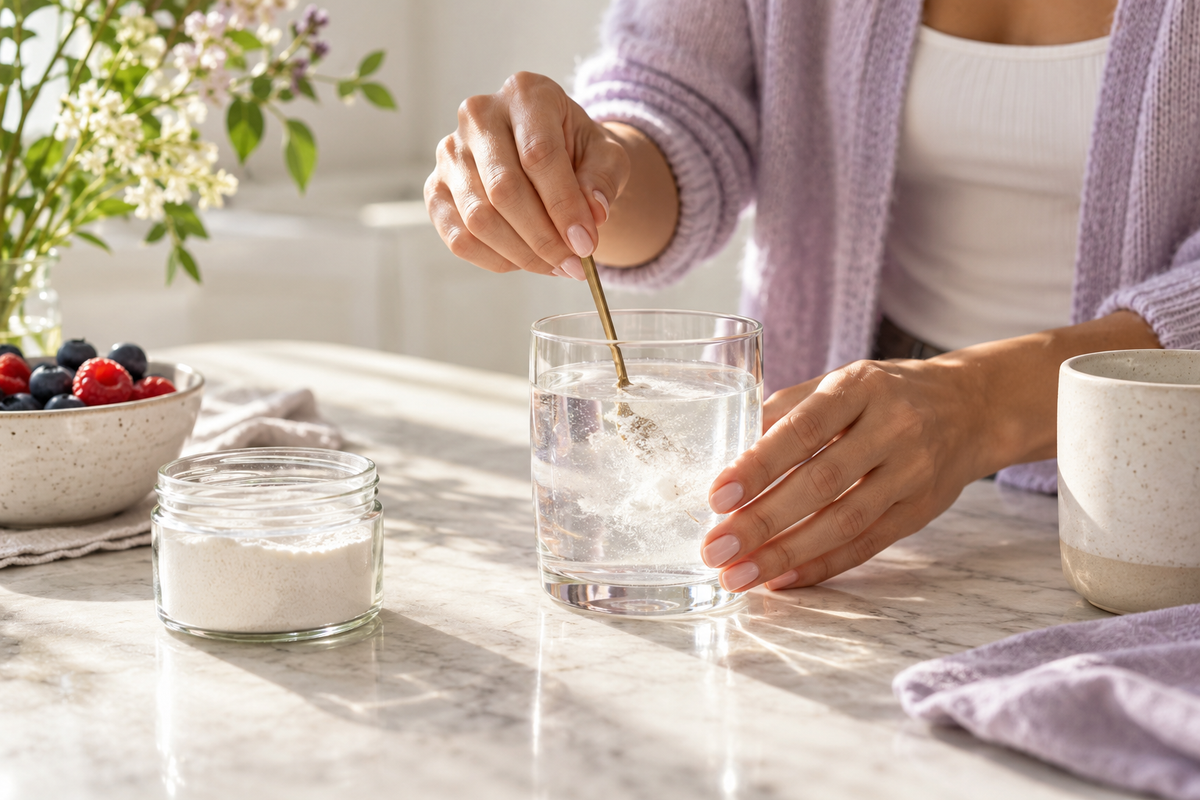
Most research uses around 3–5 grams a day of plain creatine monohydrate — the most-researched, least-expensive form — taken consistently, with no need for the old “loading” ritual. It has a strong safety record in healthy adults; staying well hydrated helps, and anyone with kidney concerns should check with their doctor first. And to retire two myths: creatine doesn’t make women “bulky,” and the small early bump on the scale is water drawn into your muscle, not fat. As with any supplement, talk to your doctor before starting, and anyone with kidney concerns should check with them first.
The Pemi lens
We’re sharing this because it reflects how we think about everything we build: real ingredients, meaningful doses, honest timelines, and no overpromising. Creatine is a perfect example of an evidence-backed tool that women were often overlooked for, and the same evidence-first philosophy is what shapes the Pemi line. Pemi products don’t contain creatine. We’re sharing this because the evidence is worth knowing.
That philosophy runs through everything we make. The Pemi Protocol brings the same standard — studied ingredients, honest dosing — to a simple daily rhythm for mood, focus, and sleep.*
Support built on evidence.
The free 2-minute quiz helps you find the daily support that fits your body and your stage — no hype, just what makes sense.
Take the Quiz*These statements have not been evaluated by the Food and Drug Administration. This product is not intended to diagnose, treat, cure, or prevent any disease. This article is for informational purposes and does not replace medical advice. Last updated October 2026.